uae-bookkeeping.com

Common Bookkeeping Mistakes UAE Businesses Make (and How to Avoid FTA Penalties)
Common Bookkeeping Mistakes UAE Businesses Make (and How to Avoid FTA Penalties)
Gupta Group International
1/22/20263 min read


Common Bookkeeping Mistakes UAE Businesses Make (and How to Avoid FTA Penalties)
In today’s fast-evolving UAE business landscape, maintaining accurate bookkeeping isn’t just good practice — it’s a regulatory requirement. With stringent tax laws, periodic Federal Tax Authority (FTA) audits and stiff penalties for non-compliance, poor bookkeeping can cost businesses thousands in fines, interest charges, and reputational damage.
Whether you operate in Dubai, Abu Dhabi, Sharjah, or a Free Zone, this blog will help you understand the most common bookkeeping pitfalls UAE businesses make — and, more importantly, how to avoid FTA penalties.
Let’s dive in.
Incomplete or Missing Financial Records
One of the biggest bookkeeping errors is failing to maintain complete transactional records. UAE law requires businesses to keep financial records, VAT invoices, returns, and supporting documents for at least five years — and up to seven or more in specific industries like real estate.
Why It Matters
Incomplete records:
⇒ Lead to disallowed VAT claims
⇒ Cause audit triggers
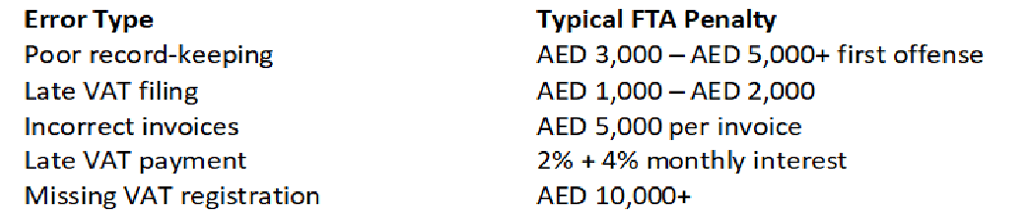
⇒ Result in fines (e.g., AED 3,000-AED 5,000 for poor record-keeping)
How to Avoid It
Use cloud-based bookkeeping (QuickBooks, Xero, Zoho) to store records
Create consistent naming conventions and folders for all invoices and receipts
Back up both digital and paper records regularly
Incorrect VAT Treatment & Classification
VAT compliance is a major bookkeeping concern. UAE businesses often:
Apply wrong VAT rates
Misclassify zero-rated or exempt supplies
Fail to apply reverse charge on imported services
These errors lead to inaccurate VAT returns and heavy penalties.
Example
Charging standard 5% VAT on a zero-rated export could result in underpaid VAT and penalties during an FTA audit.
How to Avoid It
Train staff on FTA VAT classification rules
Reconcile VAT accounts monthly
Use software with VAT-specific automation
Missing or Incorrect Tax Invoices
Every VAT-registered business in the UAE must issue compliant tax invoices. These must include:
Tax Registration Number (TRN)
VAT breakdown
Supplier details
Correct dates and numbering
Incorrect or missing invoices can attract AED 5,000 per non-compliant invoice.
How to Avoid It:
Standardise invoice templates
Validate invoices before sending
Integrate invoicing with your accounting system
Late VAT Filing & Payment
One of the most common FTA penalties arises from late VAT returns.
First late filing: AED 1,000
Repeat within 24 months: AED 2,000 or more
Late payment: escalating penalties up to 300% of unpaid tax
This is avoidable with proper bookkeeping discipline.
How to Avoid It
Set automated reminders in your accounting system
Maintain a tax calendar visible to all finance staff
Ensure VAT liabilities are calculated and paid before deadlines
Manual Errors & Non-Automated Bookkeeping
Many UAE SMEs still rely on manual spreadsheets or outdated systems — a recipe for errors and missing compliance cues. Manual processes:
Increase human error
Delay updates
Miss automated compliance checks
How to Avoid It
Switch to modern cloud accounting platforms
Use software that supports UAE tax rules
Enable automatic bank feeds and reconciliation
This drastically cuts errors and keeps your ledgers audit-ready.
Improper Bank Reconciliation
Bank reconciliation verifies that your books match your bank account — yet many businesses skip this step.
Why It’s Critical
Unreconciled books:
Mask cash flow issues
Cause discrepancies in VAT reporting
Leave unexplained adjustments during audits
How to Avoid It
Reconcile bank statements monthly
Investigate every discrepancy
Use automated reconciliation tools
Mixing Personal and Business Finances
Many small business owners use personal accounts for business expenses. This muddies your bookkeeping and increases audit risk.
How to Avoid It:
💳 Maintain a dedicated business account
💼 Separate personal expenses from business transactions
📊 Use corporate cards for employee expenses
Inadequate Cash Flow Tracking
Poor cash flow management leads to:
Missed VAT payments
Inability to settle liabilities on time
Untimely tax filings
This often results in penalties for non-payment.
How to Avoid It
Forecast cash flow weekly
Maintain sufficient VAT reserves
Automate alerts for upcoming tax payments
Failing to Track Accounts Payable and Receivable
Neglecting receivables and payables makes it harder to:
Reconcile financials
Know your taxable base
Prepare accurate financial reports
How to Avoid It
Review aged receivables monthly
Follow up on overdue invoices
Balance supplier invoices before tax filing
Unprepared for FTA Audits
Even error-free bookkeeping can be undermined by disorganisation. The FTA can audit your records at any time.
How to Stay Audit-Ready
Keep organised folders for each tax period
Maintain clear documentation trails
Conduct internal quarterly audits
Summary: Key Penalties & What Triggers Them
Best Practices for UAE Bookkeeping Compliance
To maintain accurate books and avoid FTA penalties:
1. Embrace Digital Accounting Tools
Cloud systems ensure accuracy and audit readiness.
2. Schedule Regular Reconciliations
Make reconciliation a monthly habit.
3. Automate VAT & Tax Alerts
Deploy tax calendars and automated reminders.
4. Train Your Team
Ensure finance staff understand UAE tax rules.
5. Annual Internal Reviews
Internal audits catch errors before the FTA does.
Why Professional Bookkeeping Services Matter
Bookkeeping isn’t just about numbers — it’s about compliance, readiness, and peace of mind. Outsourcing to a professional bookkeeping team ensures:
VAT accuracy
On-time filings
Audit-ready records
Peaceful relations with the FTA
Take Action: Avoid FTA Penalties Today
Don’t let bookkeeping mistakes cost you fines — or worse, disrupt your business operations. uae-bookkeeping.com specialises in UAE-compliant bookkeeping, VAT support, and audit readiness for businesses of all sizes.
Contact us now for a free consultation and get your books FTA-penalty-proof.
Start your compliance journey today!
© 2026 uae-bookkeeping.com
